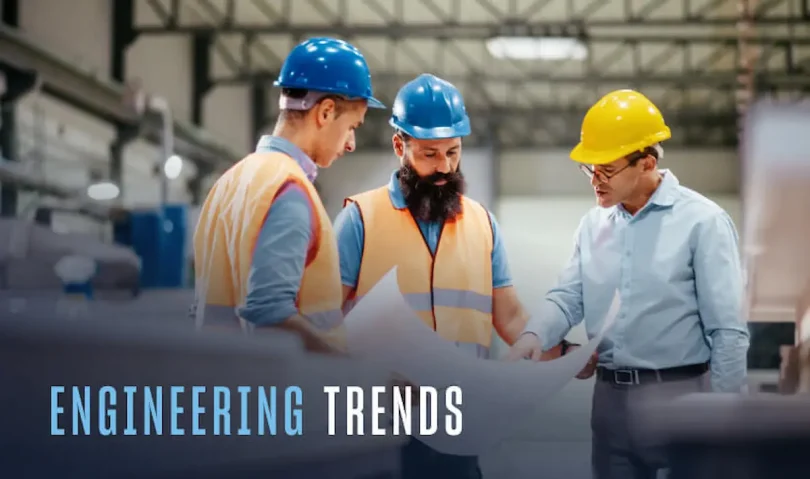

When we talk about the latest engineering trends 2026, we refer to the key developments, technologies, tools, and practices that are shaping how engineers design, build, and manage infrastructure, products, and systems. These trends are critical for students, professionals, and anyone interested in engineering because they indicate the direction of innovation and career opportunities in the coming years.
In 2026, engineering is not just about technical skills. It’s about integrating advanced technology, sustainability, and data-driven decision-making into everyday engineering processes. Let’s explore these trends in detail.
Major Engineering Trends in 2026
1. Artificial Intelligence and Data-Driven Engineering
Artificial Intelligence (AI) and machine learning are no longer optional tools in engineering. They are now central to almost every branch of engineering. Engineers are using AI to:
- Optimize designs by analyzing complex datasets.
- Predict maintenance needs and detect system failures before they occur.
- Improve project planning and resource management using AI-based decision support systems.
AI allows engineers to make more informed, efficient, and precise decisions, reducing errors and improving overall project outcomes.
2. Digital Twins and Virtual Design Environments
Digital twins, which are virtual replicas of physical systems or infrastructure, have become essential in 2026. Engineers use them to simulate, test, and optimize designs without building physical prototypes.
Virtual design environments, often integrated with augmented reality (AR) or virtual reality (VR), allow engineers to:
- Visualize complex structures or systems in a virtual space.
- Test performance under different scenarios.
- Train personnel in realistic simulated environments.
These tools reduce costs, shorten development cycles, and help engineers anticipate potential problems before implementation.
3. Additive Manufacturing, 3D Printing, and Advanced Materials
3D printing, also known as additive manufacturing, is transforming product design and manufacturing. Engineers can create complex, customized components that are lighter, stronger, and more efficient than those produced with traditional methods.
Alongside additive manufacturing, the development of advanced materials, such as composites, self-healing materials, and eco-friendly alternatives, is reshaping engineering design. In civil engineering, green construction materials are being used to reduce environmental impact. In manufacturing, these materials enhance product performance while maintaining sustainability.
4. Automation, Robotics, and Smart Factories
Automation and robotics continue to evolve rapidly. In 2026, smart factories are emerging where robots and autonomous systems perform tasks that were once manual. These systems:
- Enhance productivity and reduce human error.
- Enable precise and repetitive manufacturing processes.
- Integrate AI and IoT to optimize operations continuously.
The combination of automation and AI transforms traditional factories into smart manufacturing environments capable of self-monitoring, self-adjusting, and predictive maintenance.
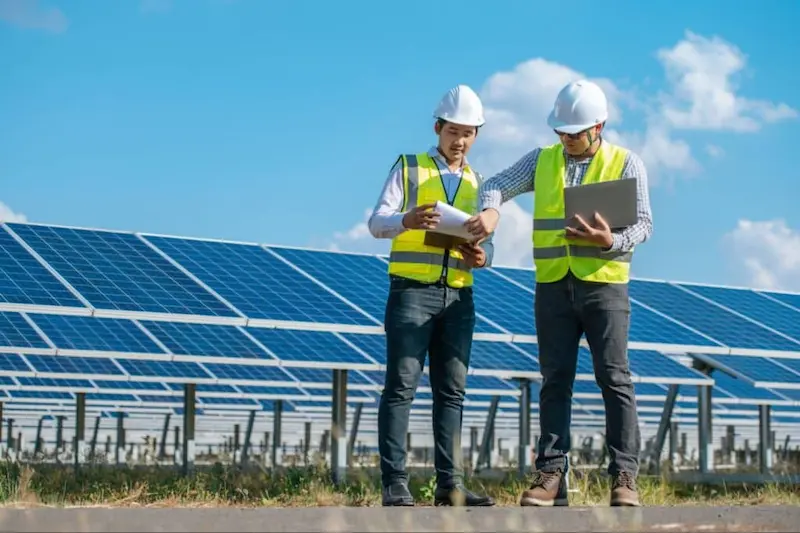
5. Sustainability and Eco-Friendly Engineering
Sustainability has become a central focus in engineering. Engineers are designing projects that minimize environmental impact, conserve energy, and utilize renewable resources. Examples include:
- Civil engineering projects using recycled materials and energy-efficient designs.
- Manufacturing processes that reduce waste and energy consumption.
- Infrastructure planning that incorporates climate resilience and resource efficiency.
The push toward sustainability ensures that engineering solutions are not only effective but also environmentally responsible.
6. Interdisciplinary Skills and Workforce Evolution
The skills required for engineers are rapidly changing. Modern engineers must combine traditional engineering knowledge with expertise in AI, robotics, programming, data analysis, and sustainability.
Organizations increasingly value engineers who can:
- Work across multiple disciplines.
- Adapt to new technologies and tools.
- Continuously update their skill sets through learning and professional development.
This shift creates opportunities for engineers who embrace lifelong learning and adaptability.
7. Internet of Things (IoT) Integration

IoT is enabling engineers to design connected systems that monitor and communicate in real-time. Examples include:
- Smart infrastructure that tracks structural health.
- Manufacturing equipment that reports performance metrics automatically.
- Energy systems that adjust consumption based on real-time data.
IoT integration improves efficiency, safety, and predictive maintenance across engineering projects.
8. Advanced Simulation and Predictive Analytics
Simulation software and predictive analytics are essential tools in modern engineering. Engineers use these tools to:
- Model complex systems and test scenarios before implementation.
- Predict outcomes, optimize processes, and reduce risk.
- Make informed decisions based on quantitative data.
This approach reduces errors, lowers costs, and accelerates project completion.
Importance of These Trends
Understanding and adopting these trends is crucial for engineers and students because they:
- Reduce errors and costs through predictive and simulation-based design.
- Improve quality and innovation by integrating AI, robotics, and advanced materials.
- Promote sustainability and environmental responsibility.
- Expand career opportunities through interdisciplinary skills.
- Prepare engineers for global industry standards and technological advancements.
You may also like to read this:
MATLAB Coding Tips For Beginners – Complete Starter Guide
Step By Step MATLAB Tutorials For Beginners To Learn Fast
Practical MATLAB Programming Examples Explained Easily
Easy MATLAB Project Tutorials For Beginners Step By Step
MATLAB Tutorial For Engineers: Complete Beginner’s Guide
How to Adapt as an Engineer
To stay relevant and competitive:
- Learn AI, machine learning, and data analysis tools.
- Gain proficiency in simulation software, digital twins, and CAD tools.
- Explore additive manufacturing and advanced material technologies.
- Understand sustainable engineering practices and energy-efficient solutions.
- Stay updated on automation, robotics, and smart manufacturing systems.
- Develop interdisciplinary skills combining engineering, programming, and analytics.
Conclusion
The latest engineering trends 2026 reflect a shift toward smarter, more efficient, and sustainable engineering practices. AI, digital twins, automation, advanced materials, IoT, and sustainability are reshaping how engineers work and the type of skills they need. Embracing these trends will not only make engineers more effective but also position them at the forefront of technological and environmental advancements.
Engineering in 2026 is about innovation, efficiency, and responsibility. Staying informed about these trends is essential for anyone aiming to build a successful career in the evolving engineering landscape.
FAQs — Latest Engineering Trends 2026
1. What are the most important engineering trends in 2026?
The key trends include Artificial Intelligence and machine learning, digital twins and virtual design environments, additive manufacturing (3D printing) and advanced materials, automation and robotics, sustainability and eco-friendly engineering, IoT integration, and advanced simulation with predictive analytics.
2. How is AI transforming engineering in 2026?
AI is helping engineers optimize designs, predict maintenance needs, reduce errors, and improve decision-making by analyzing large datasets. It is now an integral part of project planning, design, and manufacturing.
3. What are digital twins, and why are they important?
Digital twins are virtual replicas of physical systems or structures. They allow engineers to simulate and test designs before implementation, reducing costs, minimizing errors, and accelerating development cycles.
4. How is 3D printing affecting modern engineering?
3D printing enables the creation of complex, customized components that are stronger, lighter, and more efficient. It reduces material waste, speeds up prototyping, and supports innovative design solutions across multiple engineering disciplines.
5. What role does sustainability play in engineering trends?
Sustainability is central to modern engineering. Engineers are designing projects to conserve energy, reduce environmental impact, use renewable materials, and create systems resilient to climate change.