

If you’ve ever wondered what the latest MATLAB research studies are exploring — how MATLAB is being used to solve modern engineering problems, simulate complex systems, or analyze large datasets — you’re in the right place.
This article will guide you through recent research trends, new applications, and what it means for students, engineers, and researchers today.
What Are “Latest MATLAB Research Studies”?
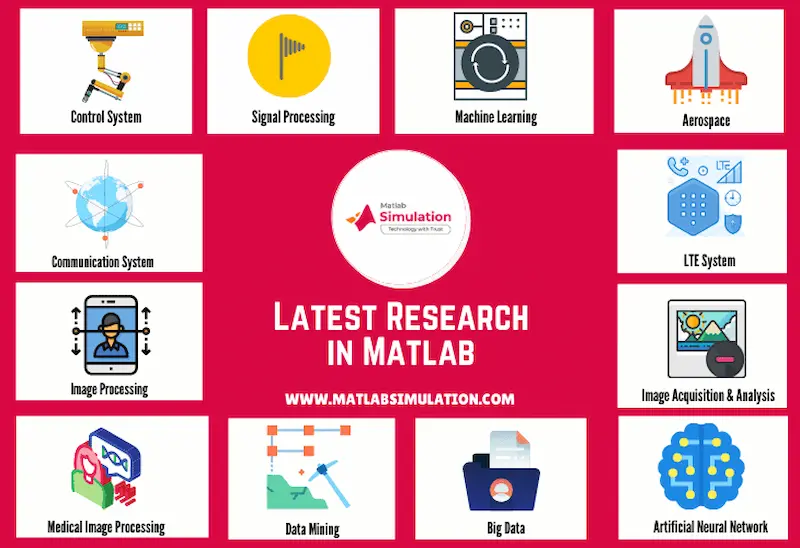
When we talk about latest MATLAB research studies, we are referring to recent academic and engineering research (roughly 2024–2025) that heavily uses MATLAB. These studies cover a range of applications including system modeling, signal processing, control systems, data-driven modeling, simulations, and even symbolic mathematics.
The common theme is that MATLAB remains a powerful platform for research due to its versatile toolboxes, intuitive syntax, and strong visualization capabilities. Whether in academia or industry, MATLAB is used to simplify complex computations and accelerate problem-solving.
Highlights from the Latest MATLAB Research Studies
1. Sparse Linear Array Analysis
Recent studies have developed MATLAB-based tools to analyze sparse sensor arrays, widely used in radar and communication systems. These tools allow researchers to visualize array configurations, compute difference coarrays, and assess analytic properties efficiently. This demonstrates how MATLAB simplifies complex mathematical modeling in engineering applications.
2. Data-Driven Model Predictive Control
Another set of latest MATLAB research studies focused on model predictive control (MPC), where system models are derived from data rather than purely theoretical approaches. MATLAB is used to implement both linear and nonlinear MPC, including advanced methods using neural networks. This approach combines classical control theory with modern AI-driven techniques, making it highly relevant for robotics and automation research.
3. Power System Simulation and Fault Analysis
Some studies used MATLAB to simulate transmission lines under various fault conditions. Researchers analyze voltage and current under single-line and multi-line faults to develop better protection and fault detection strategies. These applications highlight MATLAB’s role in practical, real-world engineering challenges.
4. Symbolic Structural Analysis
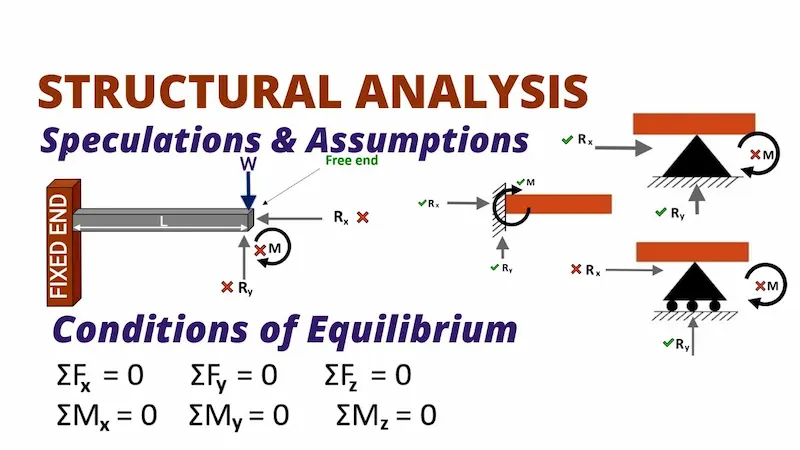
Other latest MATLAB research studies have applied MATLAB’s symbolic math capabilities to structural engineering problems. For example, symbolic analysis of continuous beams helps derive exact formulas for displacements and internal forces. This allows researchers and students to perform sensitivity analysis and understand system behavior more deeply.
5. Cross-Disciplinary Engineering Applications
Recent survey studies show that MATLAB is widely used across multiple engineering disciplines — electrical, mechanical, civil, and computer engineering. Applications range from signal processing, control systems, and optimization to machine learning, image processing, and communications. This illustrates MATLAB’s versatility as a research platform.
What’s New in MATLAB for Researchers (2025)
The latest MATLAB research studies benefit from several updates and new features:
- MATLAB toolboxes continue to expand, including support for AI, machine learning, control systems, and symbolic mathematics.
- Simulink enhancements enable system-level simulations, including hardware-in-the-loop testing.
- MATLAB provides user-friendly interfaces and visualization tools that help both students and researchers prototype and test their ideas quickly.
These updates show that MATLAB is not just a legacy tool but an evolving platform capable of supporting cutting-edge research.
You may also like to read this:
Engineering Technology News Updates: Latest Innovations 2025
Modern Engineering Innovations Explained For Everyone
MATLAB Applications In Engineering: Complete Guide
Engineering Automation Trends Guide 2025: Key Innovations
Emerging Engineering Tools And Software Guide 2025
Implications for Students and Researchers
Here’s what the latest MATLAB research studies suggest for you:
- Versatility: MATLAB can handle tasks ranging from numerical simulations to symbolic computations, making it suitable for interdisciplinary research.
- Rapid Prototyping: MATLAB’s built-in functions and toolboxes enable faster implementation of models, simulations, and data analysis.
- Integration of Modern Techniques: Many recent studies combine classical methods with AI, data-driven modeling, and optimization, showing MATLAB’s adaptability.
- Educational Benefits: MATLAB also plays a role in teaching, helping students learn computational techniques while gaining exposure to real-world applications.
Limitations to Keep in Mind
Despite its strengths, the latest MATLAB research studies highlight some limitations:
- MATLAB is a proprietary software, so licensing costs can be a barrier.
- Advanced toolboxes have a learning curve, especially for beginners.
- For very large-scale or high-performance applications, MATLAB prototypes sometimes need to be converted to more efficient programming environments.
Conclusion
In conclusion, the latest MATLAB research studies prove that MATLAB remains a central tool in modern research, from engineering and data-driven control to power systems and structural analysis. Its versatility, powerful toolboxes, and simulation capabilities make it a preferred platform for students, engineers, and researchers.
Whether you are exploring advanced signal processing, building AI-driven models, or conducting educational research, MATLAB continues to offer the tools and support needed to innovate and solve complex problems.
FAQs on Latest MATLAB Research Studies
1. What are the latest MATLAB research studies?
Recent studies (2024–2025) using MATLAB for engineering, simulations, data analysis, and modeling, often integrating modern AI or control methods.
2. Why is MATLAB still popular in research?
MATLAB combines powerful computation, specialized toolboxes, and visualization, making it versatile for engineering and scientific applications.
3. Which fields use MATLAB in research?
Electrical, mechanical, civil, control systems, robotics, signal/image processing, and AI/data-driven modeling.
4. Can MATLAB handle modern AI or data-driven research?
Yes. Recent studies implement machine learning, neural networks, and predictive control using MATLAB.
5. What are common applications?
Sparse linear array analysis, model predictive control, power system simulation, structural/symbolic analysis, and interdisciplinary engineering projects.