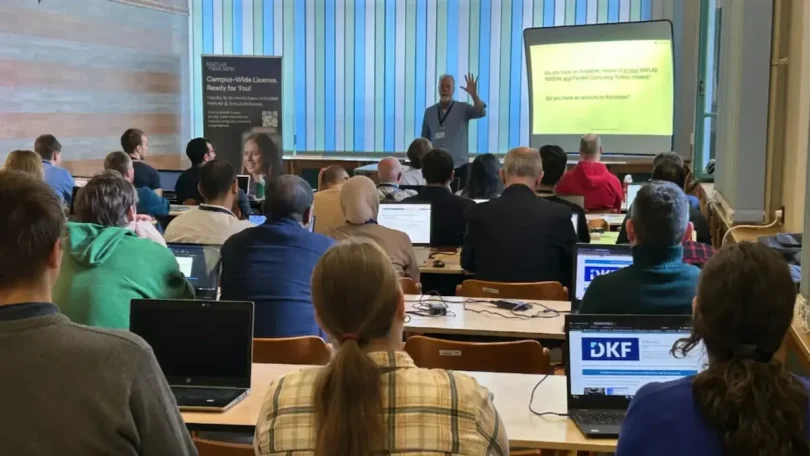

When we talk about current MATLAB scientific research, we are referring to how researchers all over the world are using MATLAB in real, cutting‑edge scientific investigations today. MATLAB isn’t just a tool you learn for class — it’s widely used as a core computing environment in research fields ranging from biomedical science and engineering to neuroscience and data science.
Let’s walk through what’s happening right now in scientific research involving MATLAB — what kinds of problems it’s being used to solve, how researchers are leveraging its capabilities, and why you might care about these developments.
What MATLAB Is and Why Researchers Use It

At the most basic level, MATLAB (short for Matrix Laboratory) is a high‑level computing language and environment used for numerical computation, simulation, data analysis, visualization, and algorithm development. It is particularly popular in research because its language is designed for mathematics and matrix operations, which are foundational to scientific computing. Researchers can write concise code to build models, analyze data, and produce visual results.
In 2025, MATLAB has evolved beyond a simple numerical tool into a full research platform that supports not only core numerical computing but also advanced applications like machine learning, neural data analysis, and high‑performance simulations. Each year, dozens of new research papers and software tools are published that use MATLAB as an essential part of the scientific workflow.
Concrete Examples of Current Research Using MATLAB
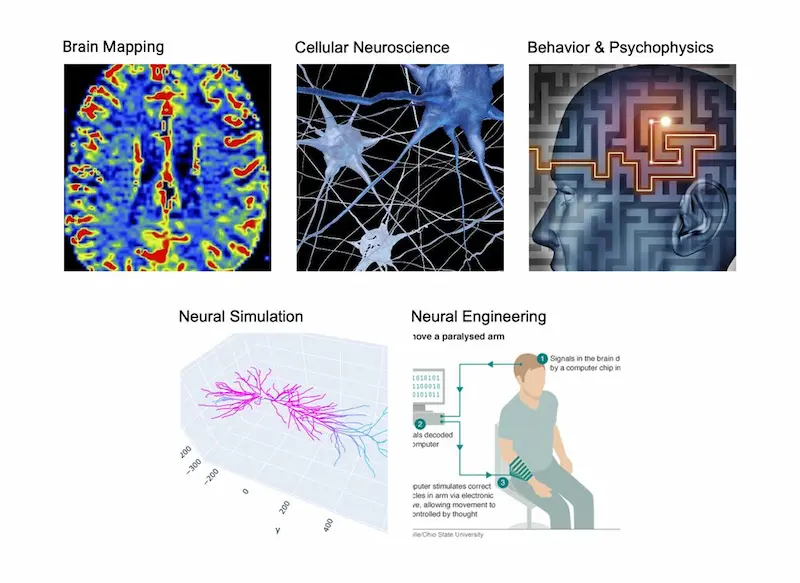
Here are some actual research projects and toolboxes from recent scientific work that show how MATLAB is being used at the frontiers of research.
1. Brain Network Analysis and Imaging with MATLAB
One recent study in computational neuroscience developed a “geometric learning” framework for analyzing brain functional networks. The research addresses a common challenge in neuroimaging: how to analyze high‑dimensional correlation matrices that represent brain networks in a way that captures their geometric structure. The researchers created a new MATLAB toolbox to embed these matrices into a space where advanced machine learning techniques can be applied efficiently. This work demonstrates how MATLAB is used not just for raw data analysis, but as a foundation for new algorithmic frameworks in neuroscience. The open‑source toolbox is intended to help other researchers adopt and extend the method. arXiv
2. Ultrasound Microbubble Dynamics Simulations
Another recent project developed a MATLAB‑based toolbox called The‑Bodega designed for simulating microbubble motion in vascular networks. These simulations are important for a technique called Ultrasound Localization Microscopy, which aims to produce high‑resolution ultrasound images of microvasculature. The toolbox models microbubble dynamics in realistic anatomical graphs and benchmarks different imaging algorithms. The fact that MATLAB was chosen to build this kind of domain‑specific simulation platform reflects its usefulness in biomedical engineering research. arXiv
3. Signal Processing and Array Analysis Tools
In fields such as wireless communication and radar, researchers have created custom MATLAB applications to study sparse linear arrays — a type of sensor configuration used in advanced signal detection and direction‑of‑arrival estimation. One research project built a graphical user interface (GUI) in MATLAB to make it easier for users to input configurations, visualize results, and explore coarray domain behavior — a perspective that goes beyond traditional array visualization. The goal of the project is to both support ongoing research and serve as a teaching tool for students entering this field. arXiv
You may also like to read this:
Emerging Engineering Tools And Software Guide 2025
Latest MATLAB Research Studies – 2024–2025 Insights
Latest Academic MATLAB Research News And Updates 2025
Latest Engineering Research Updates 2026 You Can’t Miss – MATLAB News
MATLAB Research Papers Explained – Complete Guide
Broader Trends in MATLAB Research Across Disciplines
The examples above illustrate specific research projects, but MATLAB’s role is broader and permeates many scientific and engineering disciplines right now.
Signal and System Modeling in Engineering
A recent survey on MATLAB usage in engineering research shows that MATLAB is widely applied to areas like signal processing, control systems, power systems, image processing, and communication systems. Researchers leverage MATLAB’s extensive toolbox ecosystem — such as the Optimization Toolbox, Signal Processing Toolbox, and Simulink for dynamic system modeling — to prototype solutions that can later be deployed in hardware or production environments. These surveys often include reproducible code examples and best practices for performance and validation in real research workflows. IJRASET
Education and Research Integration
MATLAB is also a focus of studies on teaching and learning, where it serves as a bridge between mathematical theory and computational practice. For instance, research into multimodal learning in statistic classrooms highlights how MATLAB can support student development from theoretical understanding to data analysis skills. It incorporates elements like adaptive feedback, real‑time visualization, and structured problem‑solving, which are crucial in growing computational competence among diverse learners. MDPI
Scientific Computing in Natural Sciences
Beyond engineering, MATLAB continues to play a role in experimental and theoretical research across natural sciences such as physics, chemistry, and environmental sciences. Review papers in these areas describe how MATLAB is used for modeling physical processes, processing experimental data, and visualizing results in ways that would be difficult without an integrated computing platform. Ejtas
Support and Funding for Ongoing MATLAB Research
In 2025, MathWorks, the company behind MATLAB, actively supports scientific research through programs and funding calls for research proposals. These calls invite researchers to propose projects that use MATLAB and Simulink to tackle major challenges in aerospace, robotics, medical devices, industrial systems, and more. Researchers selected through these calls receive direct support to advance their work, which underscores the ongoing investment in MATLAB as a research platform. MATLAB Blogs
More recently, winners of the Spring 2025 MathWorks research proposal program include projects that integrate MATLAB modeling with real industry challenges — such as creating individualized human body models for motion sickness prediction in automated vehicles and configurable simulation models for electric vehicle systems. MATLAB Blogs
Why MATLAB Is Still So Widely Used in Scientific Research
You might wonder, with so many programming languages and tools available today like Python or Julia, why MATLAB remains prominent in scientific research. There are a few key reasons:
- Integrated Environment: MATLAB provides a single environment where you can do computation, visualization, algorithm development, and documentation without switching tools.
- Toolboxes for Specialized Research: The extensive collection of toolboxes (for optimization, signal processing, neural networks, etc.) means researchers don’t have to build complex functions from scratch.
- Industry and Academic Adoption: MATLAB is used in both academia and industry, enabling research projects to have pathways from prototype to real applications.
- Visualization and Simulation Power: Compared to more general programming languages, MATLAB’s visualization functions are designed for exploratory research and rapid iteration.
- Support for Reproducible Workflows: Newer features like Live Scripts and integration with version control systems make it easier to share and reproduce research workflows.
Conclusion
The landscape of current MATLAB scientific research is rich and evolving. Researchers use MATLAB to:
- Build advanced scientific toolboxes that extend the state of the art.
- Develop simulation platforms for biomedical and physical systems.
- Create interactive GUIs to support research and education.
- Integrate classical engineering problems with modern computation and machine learning.
MATLAB remains vital in scientific research because of its powerful computational capabilities, extensive libraries, and strong support for both prototype and production workflows. Whether you are a student, a research engineer, or someone curious about scientific computing, understanding how MATLAB is used today gives you a window into how many real problems are being solved.
FAQs on Current MATLAB Scientific Research
1. What is MATLAB used for in scientific research?
MATLAB is used for numerical computation, data analysis, visualization, algorithm development, and modeling. Researchers use it to simulate complex systems, analyze large datasets, and develop specialized toolboxes for applications in engineering, physics, biology, and more.
2. How is MATLAB different from other programming languages like Python?
MATLAB is designed specifically for scientific computing and matrix operations, with built-in functions for visualization, simulation, and algorithm development. While Python is general-purpose, MATLAB offers ready-to-use toolboxes and an integrated environment tailored for research workflows, making prototyping faster.
3. What are some current applications of MATLAB in research?
Current research applications include:
Brain network analysis and neuroimaging.
Ultrasound microbubble simulations for medical imaging.
Signal processing and sparse array analysis in communications.
Quantum systems modeling.
Machine learning and AI algorithm prototyping.
4. Can MATLAB be used for machine learning and AI research?
Yes. MATLAB provides dedicated toolboxes for machine learning, deep learning, and predictive analytics. Researchers use it to preprocess data, build models, and deploy algorithms efficiently without switching between multiple tools.
5. Is MATLAB still relevant in modern scientific research?
Absolutely. MATLAB remains widely used because of its extensive toolboxes, visualization capabilities, reproducibility features, and strong integration with both academic and industrial research workflows. It continues to support cutting-edge applications in physics, engineering, biomedical sciences, and more.