

If you’re involved in research, teaching, or just exploring advanced computational tools, keeping up with academic MATLAB research news is essential. MATLAB has long been a cornerstone in engineering, science, and data analysis, but the landscape is evolving rapidly. From new software updates to AI-assisted tools, open-source libraries, and innovative research applications, there’s a lot happening that can transform how you work with MATLAB.
In this article, I’ll walk you through the latest developments in MATLAB for academia and research, share insights from recent studies, and explain why these changes matter for students, researchers, and educators alike.
Latest MATLAB Updates for Academia

MathWorks, the company behind MATLAB, has been actively enhancing the software to meet modern research and educational needs. Some of the most notable updates include:
1. MATLAB Copilot – Your AI Research Assistant
One of the biggest changes is MATLAB Copilot, a generative AI assistant integrated directly into MATLAB and Simulink. This tool helps you:
- Write code faster and with fewer errors.
- Get suggestions for complex algorithms or functions.
- Debug scripts efficiently.
For researchers, this means less time wrestling with code and more time focusing on experimentation and analysis. For students, Copilot can serve as a guide to understand MATLAB syntax and best practices.
2. Redesigned Interface
The 2025 release series introduced a modern interface using JavaScript and HTML, replacing the older Java-based design. This update brings:
- A faster, more responsive user experience.
- Improved plotting and graphics.
- Simplified navigation for large projects and simulations.
A smooth, intuitive interface can drastically reduce the learning curve, making MATLAB more accessible to beginners and more efficient for experts.
3. Enhanced Toolbox Features
MATLAB’s toolboxes are the backbone of specialized research. Recent improvements include:
- Deep Learning Toolbox: Better support for PyTorch and TensorFlow models.
- Signal and Data Processing: Faster algorithms and compressed file data import.
- Python Integration: You can now embed Python code directly in Simulink workflows, bridging MATLAB with popular machine learning libraries.
These features make MATLAB more versatile for interdisciplinary research and modern data-intensive projects.
Open-Source and Research-Oriented MATLAB Toolboxes
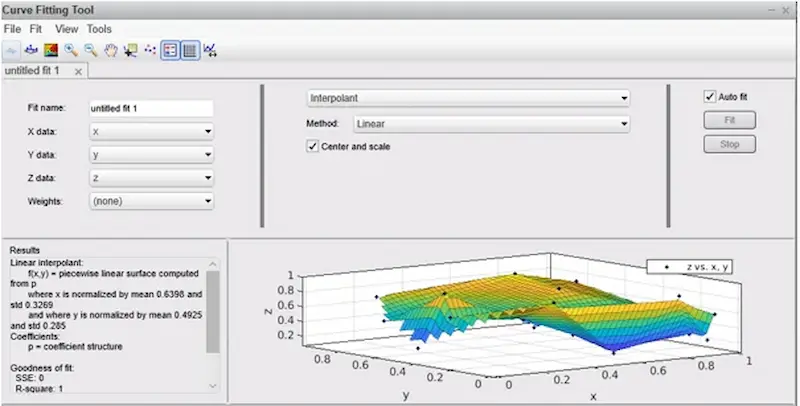
Beyond official updates, the academic community is actively creating research-focused MATLAB toolboxes. These open-source tools are invaluable for specialized research applications. Examples include:
1. PhasorArray Toolbox
Designed for harmonic analysis and control design, this toolbox allows:
- Object-oriented manipulation of periodic matrices.
- Solving harmonic equations (Sylvester, Lyapunov, Riccati).
- Integration with other MATLAB tools for simulation and control research.
2. Backstepping Kernel Toolbox
A new toolbox aimed at control engineering researchers automates backstepping control design using the power series method, simplifying complex control system development.
3. Advanced Estimation Toolboxes
Innovations like derivative-free Extended Kalman Filters allow researchers to estimate states in continuous-discrete nonlinear systems efficiently, especially where traditional Jacobian methods are challenging.
These tools help researchers explore complex systems without reinventing the wheel, accelerating both learning and discovery.
You may also like to read this:
Modern Engineering Innovations Explained For Everyone
MATLAB Applications In Engineering: Complete Guide
Engineering Automation Trends Guide 2025: Key Innovations
Emerging Engineering Tools And Software Guide 2025
Latest MATLAB Research Studies – 2024–2025 Insights
MATLAB in Academic Research Projects
MATLAB isn’t just software; it’s a platform for cutting-edge research. Recent academic initiatives demonstrate its wide application:
- AI and Safety-Critical Systems: Research at NeurIPS 2025 showed MATLAB being used to model AI behavior in safety-critical applications.
- Biomedical Research: MATLAB-based QSPR (Quantitative Structure–Property Relationship) studies help predict drug properties, like asthma medications, using machine learning and topological indices.
- Engineering Education: Multimodal learning studies are using MATLAB to improve student engagement in statistics and data analysis courses.
Whether it’s AI, biomedical science, or engineering education, MATLAB continues to bridge theoretical research and practical application.
Community Engagement and Academic Initiatives
MATLAB’s impact is amplified by its community and institutional involvement:
- Research Grants: MathWorks regularly supports academic research through grants for projects that leverage MATLAB and Simulink in innovative ways.
- Special Interest Groups (SIGs): Universities are establishing SIGs to promote collaboration, interdisciplinary research, and knowledge sharing using MATLAB.
- MATLAB EXPO Events: Conferences and expos bring together engineers, researchers, and students to discuss innovations, share best practices, and learn about new tools.
Being part of this community opens opportunities for collaboration, professional development, and funding — all critical for academic success.
Why This Matters for You
Whether you’re a student, educator, or researcher, here’s why keeping up with academic MATLAB research news is crucial:
- Efficiency: AI tools like Copilot speed up coding and debugging.
- Accessibility: Modern interfaces and open-source toolboxes make MATLAB easier to use and more versatile.
- Interdisciplinary Research: Seamless Python integration and support for AI frameworks allow MATLAB to work in multiple research domains.
- Collaboration Opportunities: Community events, grants, and SIGs foster collaboration and knowledge sharing.
Staying updated ensures you can leverage the latest features, tools, and research findings, maximizing the impact of your work.
FAQs About Academic MATLAB Research
Q1: Can students access all MATLAB toolboxes for free?
A: Many universities provide MATLAB and select toolboxes for free to students. Open-source toolboxes are also widely available.
Q2: How can I use MATLAB Copilot for research?
A: Copilot helps write scripts, debug code, and provide suggestions for modeling and simulations — reducing manual coding effort.
Q3: Are there MATLAB resources for interdisciplinary research?
A: Yes. With Python integration and AI/deep-learning support, MATLAB can be used across engineering, biomedical, and data science projects.
Q4: How can I get involved in MATLAB community initiatives?
A: Join university SIGs, attend MATLAB EXPO events, participate in online forums, and follow MathWorks academic programs.
Conclusion
Academic MATLAB research news shows that MATLAB is more than just software — it’s a dynamic platform driving innovation, learning, and collaboration. From AI-assisted coding with MATLAB Copilot to research-specific open-source toolboxes and community engagement, these developments make MATLAB an essential tool for students, educators, and researchers alike.
By keeping up with these updates, you can accelerate your projects, collaborate more effectively, and explore new frontiers in science and engineering.